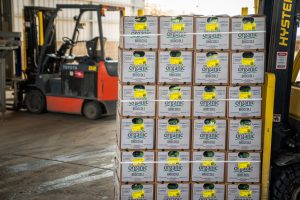
Peak season outbound isn't "order and ship" — you need to secure a time slot first
Every year before Black Friday, Christmas, and the European year-end holidays, shipments from China to the United States,United KingdomParcels for the EU and other destinations will be consolidated at the warehouse. Many buyers assume that as long as the goods arrive at the China warehouse, international shipping can be arranged at any time, but in peak season the warehouse's receiving, quality inspection, consolidation, packing, and dispatch are all queued operations. If all orders are crammed into the same week for dispatch, waiting times will be stretched out, and you may even miss sales or gift-giving deadlines. This article covers just one thing: how to book an outbound slot with a China warehouse before peak season (peak season outbound slot booking China warehouse), locking in scheduling, buffers, and priorities in advance.
It should be noted that this article is intended for overseas buyers who purchase from platforms such as Taobao, JD.com, Pinduoduo, and 1688 and need a China warehouse to receive, consolidate, and then ship internationally, and it also applies to cross-border sellers doing small-batch personal use. Specific shipping times and costs are subject to real-time quotes, and customs and tax requirements are subject to the latest official regulations of the destination country.
First distinguish the three types of "time," then talk about booking
A lot of scheduling chaos happens because these three timelines get lumped together:
- Supplier shipping-to-warehouse time:The time from when the seller ships from within China to when the parcel is signed for and registered by the China warehouse.
- Warehouse processing time: the time occupied by receiving, basic quality inspection and photography, consolidation, relabeling, repackaging, and picking and packing.
- International transit time: transport to the destination country after handover to the carrier, subject to shipping routes,customs clearanceand peak-season capacity impacts, and cannot be guaranteed unilaterally by the warehouse.
Booking an outbound time slot is essentially locking in the second segment, the "warehouse processing time." The first segment depends on you chasing the supplier, the third segment depends on the carrier, and only the middle segment can be actively managed through scheduling.
What fields should a peak season schedule include?
Don't just say "ship this batch ASAP" in chat. It's recommended to create a scheduling table, with one row per order or per batch, containing at least the following fields:
| Field | Purpose | Example of how to fill it in |
|---|---|---|
| Order/Batch number | Unique identifier when communicating with the warehouse | Custom reference number, avoid duplicating platform order numbers |
| Supplier and domestic tracking number | Used for arrival matching | Fill in as much as you have; mark anything missing |
| Estimated arrival date at warehouse | Determines whether the target outbound time slot can be met | Based on the supplier's promised date, allow for deviation |
| Target outbound time slot | Operation window booked with the warehouse | Specify the week number or date range; do not write "as soon as possible" |
| Operation Type | Determines how much labor time is required | Consolidation only / Requires QC photos / Requires relabeling / Requires repackaging |
| Destination country and address status | Avoid discovering a missing address only right before dispatch | Mark whether the address has been verified |
| Priority | Decide who goes first when there's a conflict | High / Medium / Can be deferred |
This table doesn't require a complex system—a single shared spreadsheet will do. Its value lies in this: when the warehouse receives dozens of batches of goods at the same time, you can use the same language to explain "which batch ships first and which batch can wait."
How to set arrival buffer: leave room for supplier variance
The most common problem during peak season is being overly optimistic about the "estimated arrival at warehouse." It's recommended to set buffers using the following method:
- Add a buffer to the shipping date promised by the supplier, and use that as the estimated warehouse arrival date — rather than treating the promised date directly as the arrival date.
- For goods that need customization, relabeling, or repackaging, the buffer should be longer, because the supplier side may also have queues.
- If the same batch of goods comes from multiple suppliers, set the target outbound time slot based on whichever one arrives at the warehouse last — otherwise you'll end up with "one item holding up the whole batch."
- If a certain shipment clearly won't make it in time, decide in advance whether to split the batch and ship part first, or delay the whole batch. Splitting the batch adds an extra outbound operation, so you need to inform the warehouse in advance.
Buffering isn't procrastination — it's absorbing uncertainty in advance. During peak season, goods that arrive at the warehouse early usually get earlier processing slots.
How to set priorities: schedule three types of orders separately
When multiple orders compete for the same time slot, you can use the following classification method:
- Category A: Has a hard deadlineFor example, a shipping date already promised to a customer, holiday gifts, or the launch date of a platform promotion. These orders get priority in locking in time slots.
- Category B: Has a target but can float slightlyFor example, restocking inventory — a few days' delay won't affect sales. It can be scheduled after Category A.
- Category C: Can be postponed. For example, non-urgent personal stockpiles or next-season goods. During peak season, voluntarily give way and ship after the rush passes.
After dividing your orders into these three categories, then confirm the time slot with the warehouse — communication will be much clearer. You can also state your priorities directly when requesting a quote, so the warehouse can determine which tasks can be combined and which must be handled separately.
Four pieces of information that must be confirmed before dispatch
A booked time slot does not guarantee a smooth dispatch. Before dispatch, please confirm item by item:
- Recipient Address: Whether the country, postal code, phone number, and street address information are complete, and whether they match your platform account.
- Products and Quantities: Whether the consolidated package matches your list, and whether there are wrong styles, wrong colors, or wrong quantities that need to be handled first.
- Packaging requirements: Whether fragile items, liquids, and products containing batteries need extra cushioning, reinforcement, or outer box replacement, and whether this has been communicated to the warehouse.
- Markings and Labels: Whether labels need to be replaced, relabeled, or have recipient information added, and who provides the label content.
If any one of these four items is missing, it can lead to work interruption and re-queuing. During peak season, the cost of re-queuing is higher than usual.
Exception handling: what to do if you can't make your slot
If you find that a certain batch of goods can't make the already-booked time slot, it's recommended to handle it in the following order:
- First determine whether it's a "late warehouse arrival" or "work not finished." For the former, you need to chase the supplier; for the latter, you need to confirm the remaining workload with the warehouse.
- If it's only a slight delay, ask whether it can be pushed to the next time slot instead of going through the entire booking process again.
- If it affects a hard deadline, consider splitting the shipment: send out the portion that has already arrived at the warehouse and been verified first, and send the rest later.
- If customs clearance in the destination country or carrier capacity is tight, adjust expectations promptly and notify the final recipient to avoid misunderstandings.
Exceptions aren't scary—what's scary is waiting until the last moment to speak up. During peak season, the earlier a problem is exposed, the more remediation options you have.
Turn scheduling into a reusable process
After peak season ends, record this season's schedule, actual warehouse arrival dates, actual dispatch dates, and the problems you encountered. Before the next peak season, you'll have a reference based on your own real rhythm, instead of figuring it out from scratch every year. For buyers who regularly purchase from China, this approach can significantly reduce the anxiety of "the goods arrived but can't be shipped out."
If you need China warehouse receiving, basic quality inspection and photography, consolidation, relabeling, repackaging, storage, and pick-and-pack, then arrange international shipping, you can first learn about ourConsolidation and Forwarding Service, or viewFee DescriptionOnce the scheduling information is ready, useAfter registeringOnce you set up your warehouse identifier, you can start managing your inbound and outbound pace by batch.