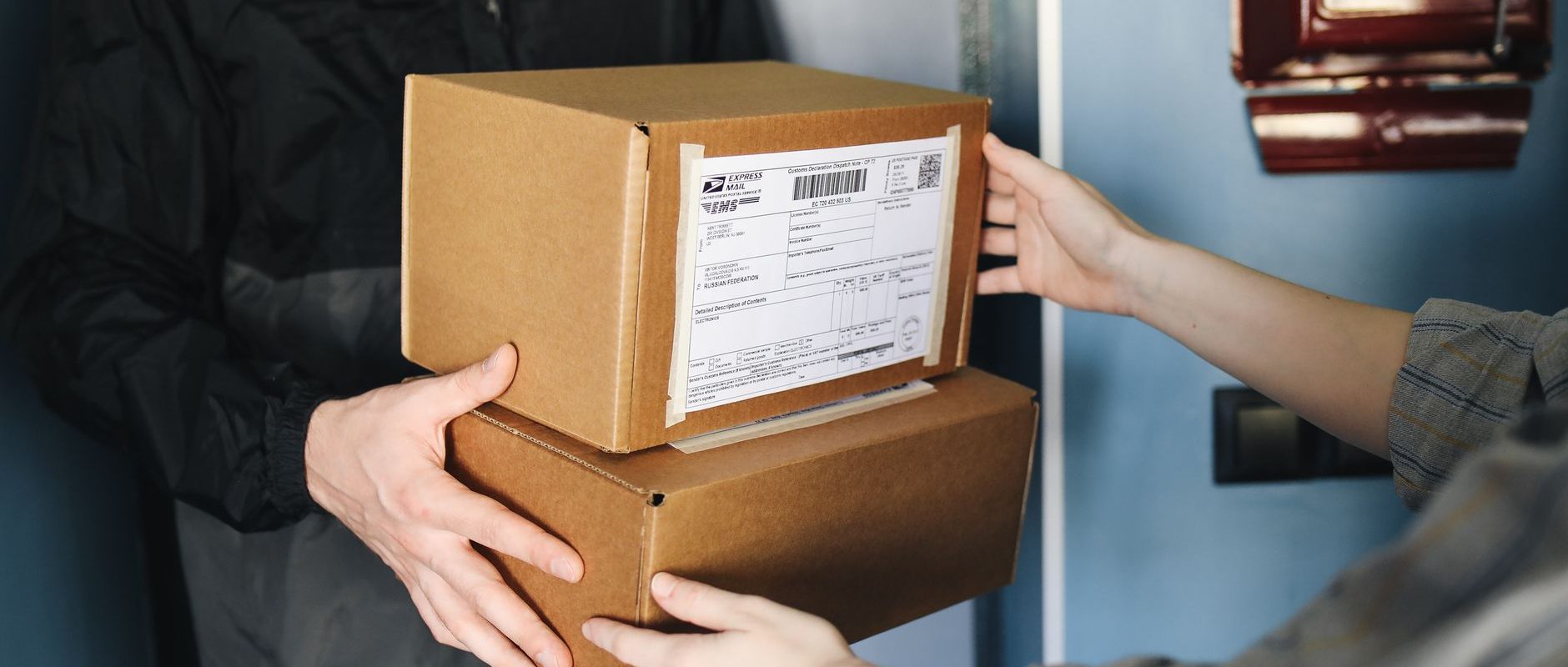
Why outer box damage must be handled before outbound shipment
After placing an order on Chinese platforms such as Taobao, JD.com, and 1688, the parcel first arrives at a Chinese warehouse, then is consolidated and shipped to Europe. Crushing, dampness, or breaks during domestic transport are not uncommon. If the warehouse directly merges this parcel into consolidation and arranges international shipping, responsibility for the damage becomes hard to determine: was it already like this when the seller shipped it, was it caused by the domestic courier, or was it caused during international transport? For overseas buyers, the safest approach is to complete handling of the damaged parcel before international dispatch, keeping the photos, product condition, and handling decision all at the China warehouse stage.
This article is for consumers who shop on Chinese platforms and have delivery addresses in Europe, and provides a checklist you can follow directly. It does not discuss compensation amounts, nor does it promise any shipping timeframes. It addresses only one question: if the outer box is damaged, in what order should you handle it next?
Step 1: Record first, then act
When you find an abnormality in the outer box, do not rush to open it or let the warehouse directly replace the box. First secure the evidence, in the following order:
- Photograph the whole box appearance: one each of the front, back, and four sides, plus one close-up of the damaged area so the size and location of the break are clearly visible.
- Photograph the waybill and carton mark: make sure the domestic tracking number, seller information, and carton number are readable in the same photo.
- Photograph the weighing reading: if the warehouse has a record of weighing upon arrival, put the weight and appearance photos in the same record for easy later comparison.
- Photograph the seal condition: whether the tape has been re-stuck, and whether there are signs of re-sealing.
It is recommended to name photos as "date + domestic tracking number + sequence number" and store them together in one folder. Later, whether you are contacting the seller or deciding whether to temporarily hold the shipment from leaving the warehouse, this set of photos is the only traceable evidence.
Step 2: Open the box and check the product itself
Outer box damage does not necessarily mean the product is damaged, but you must open the box to confirm. When checking, go through the following items one by one:
| Checklist items | What to check | Recording method |
|---|---|---|
| Item quantity | Whether it matches the seller's order or packing list | Count item by item, take a group photo |
| Product appearance | Scratches, dents, cracks, stains, moisture damage | Close-up photos of damaged areas |
| Accessories and manuals | Whether complete, whether crushed or deformed | Check against the seller's list |
| Retail packaging | Whether the color box or gift box is damaged | Take individual photos, note whether it affects gift-giving |
| Functional items | whether it can power on, boot up, and function normally | Perform simple tests where possible and record the results |
If the product itself is intact and only the outer box is damaged, it is usually a case where outbound shipment can continue; if the product itself is damaged or accessories are missing, proceed to the next decision step.
Step 3: Decide whether to ship out, repackage, or hold
After verification is complete, it generally falls into one of three dispositions:
Scenario 1: The product is intact, only the outer box is damaged
You can have the warehouse repackage it: replace the outer box, add cushioning material, reseal the box, and note "original outer box damaged, repackaged" in the package record. After repackaging, it is recommended to take another photo of the new outer box as the pre-shipment condition. This type of situation does not affect consolidation, and international shipping can proceed as originally planned.
Scenario 2: The product is slightly damaged and the buyer can accept it
If it is only a dent in the retail packaging that does not affect use, the buyer needs to explicitly state "accept and continue outbound shipment." This confirmation should be written into the warehouse instructions to avoid disputes after shipment. If this item is a gift, it is recommended to also assess whether to replace the retail packaging or adjust the gifting arrangements.
Scenario 3: The product is damaged or accessories are missing
In this case, outbound shipment should be put on hold, and you should first communicate with the seller about reshipment, exchange, or refund. During the hold, the package continues to be stored in the China warehouse and is not included in this consolidation. Once the seller's resolution is clear, decide whether to reship to the warehouse and ship it out together, or ship the intact portion first. For adjustments to the consolidation scope, you can refer to the on-site Consolidated shipping explanation, clearly stating "which orders are included in this consolidation."
Step 4: Turn the decision into instructions the warehouse can execute
Many damage cases get stuck at "it was mentioned but not written clearly." Instructions to the warehouse should at least include:
- which domestic tracking number and which item are involved;
- Under which work order the photo records are filed;
- Disposition conclusion: repack, hold, partial dispatch;
- If it is a repack, whether the outer box needs to be replaced, cushioning added, and the old label removed;
- If it is a hold, until when should it be held, and whose confirmation are you waiting for?
The more specific the instructions, the less likely the warehouse is to make a mistake. This is especially true in consolidation scenarios, where holding back one package affects the dispatch time of the entire box; writing it clearly in advance avoids repeated back-and-forth communication.
Step 5: Keep evidence and communicate with the seller
When communicating with the seller, it is recommended to send everything at once: photos of the outer box, unpacking photos, photos of the damaged parts of the product, the order number, and the domestic tracking number. In the text description, state only the facts, for example, "There is a fist-sized hole on the right side of the outer box, one corner of the inner color box is crushed, and no scratches are visible on the product itself." Do not jump to conclusions like "the courier definitely broke it." Sellers usually need these materials to go through their internal process; the more complete the materials, the faster the handling.
If the seller agrees to reship, the replacement package must also undergo an arrival inspection once it reaches the warehouse; confirm the replacement is intact before merging it into the consolidated shipment. If the seller agrees to a refund and the product will no longer be shipped out, note the handling method for that item in the warehouse records to prevent it from being mistakenly packed into the international parcel.
Frequently Asked Questions
The outer box is damaged but the product is fine—do I still need to tell the buyer?
Yes. The "buyer" mentioned here is you yourself—the person who placed the order on a Chinese platform and receives the goods in Europe. Even if the product is intact, it is advisable to leave a note in your own order record stating "outer box damaged and repacked," for easy verification later.
Can it be shipped out first and handled once it reaches Europe?
Not recommended. Once the international leg has been dispatched, damage liability is very hard to trace back, and the cost of reshipping or returning/exchanging is also higher. Anything that can be resolved at the domestic warehouse should be resolved there as much as possible.
Will heavy packaging affect the consolidated box volume and cost?
Replacing the outer box and adding cushioning material may change the package dimensions and weight, which in turn affects the international shipping quote. The exact cost is subject to the real-time quote after warehouse measurement; you may refer to Price Explanation. If you are sensitive to cost, you can confirm the approximate size change before repacking.
One-page checklist
- If damage is found, photograph first: the whole box, a close-up of the damage, the waybill, the seal, and the weight;
- Unpack and verify: quantity, appearance, accessories, retail packaging, functionality;
- Choose one of three decisions: repack and dispatch, accept and dispatch, or hold pending seller handling;
- Write it as an executable instruction for the warehouse, noting the tracking number and the disposition conclusion;
- When communicating with the seller, present only facts and photos, and provide all materials at once;
- After the replacement item arrives at the warehouse, re-inspect it, then decide whether to merge it into the consolidated shipment;
- All photos are archived under a unified naming convention and kept until after the international parcel is signed for.
If you don't yet have a China warehouse receiving address, you can first Register an account Get the warehouse information, then handle the damaged parcel according to the process above. Stopping damage before international dispatch is the most worry-free step for overseas buyers shopping from China.