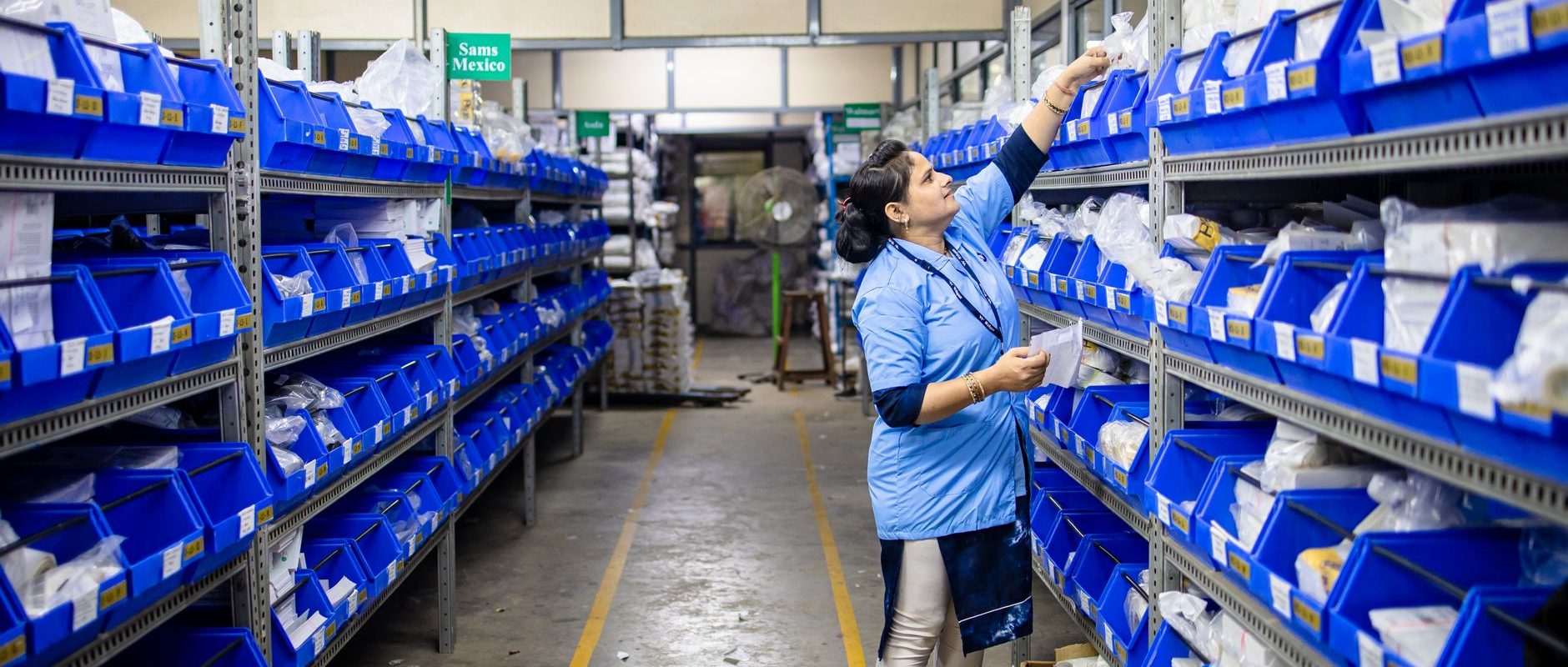
Why EU buyers need a China warehouse receiving checklist
After placing an order from a Chinese platform or supplier, the goods do not fly directly to Europe. They first arrive at the receiving warehouse you use in China, where they are signed for, verified, and temporarily stored, and only then enter the consolidation and international shipping stages. Many subsequent disputes—wrong quantity, wrong color, crushed outer box, missing accessories—actually already existed before the goods entered international shipping; it was just that no one checked item by item at the time. The value of an actionable China warehouse inbound receiving checklist is to lock these inspection actions into place, so that problems are discovered, recorded, and confirmed inside the warehouse, rather than waiting until the package reaches the EU to trace responsibility backward.
This article is intended for buyers and small importers who purchase from China and need to consolidate goods at a China warehouse before shipping to the EU. It breaks down the process chronologically: what to prepare before placing an order, what to verify upon arrival at the warehouse, how to record anomalies when discovered, and how to proceed to consolidation and outbound shipping after verification is complete. For all judgments involving customs, taxes, and compliance, please refer to the official requirements of the destination country.
Stage 1: Preparing information before placing an order
Whether the receiving verification goes smoothly depends largely on what information was left when placing the order. It is recommended to organize the following items into a simple table before placing the order and send it to the seller along with the order.
- Receiving warehouse information:Warehouse name, address, recipient identifier, contact phone number. Incomplete information will result in the package being unable to be identified and attributed.
- Member or customer identifier:If the warehouse uses a code to distinguish customers, be sure to have the seller write that identifier on the outer box label or the accompanying documents.
- Order-to-SKU correspondence: Which SKUs, quantities, colors, and sizes correspond to each order number; it is best to list them in a table.
- Domestic China waybill number: Ask the seller to provide the domestic courier tracking number after shipping, so the warehouse can match the arriving goods.
- Special Instructions: fragile, contains liquids, contains batteries, requires separate packaging, etc. Inform them in advance to avoid last-minute handling after arrival at the warehouse.
The more detailed this step is, the less trouble there will be during later verification. If the seller cannot provide complete information, at least keep order screenshots and chat records as a basis for later verification.
Stage 2: Signing for and matching goods upon arrival at the warehouse
After a package arrives at the China warehouse, the first thing to do is confirm "who this package belongs to." Warehouses usually match it based on the outer box label, recipient identifier, or domestic tracking number. You can ask the warehouse to record the following at the time of receipt:
- The arrival date at the warehouse and the receipt status (normal receipt, abnormal receipt, rejected);
- The quantity of outer boxes and the label information;
- The appearance and condition of the outer box (whether it is damaged, damp, deformed, or shows signs of being resealed);
- Which order or which batch of goods it corresponds to.
If the seller shows the package as delivered but the warehouse cannot match it, don't jump to conclusions. Common reasons are missing label information, tracking numbers not yet synced, or multiple packages shipped together. In this case, compare the tracking number and delivery screenshot provided by the seller against the warehouse records one by one to determine whether it is a matching issue or the package really hasn't arrived.
Stage 3: Core items to check when opening and inspecting packages
Unboxing verification is the most critical step in the entire checklist. It is recommended to check item by item in the order below, and take photos as evidence at the same time.
| Checklist items | Inspection contents | Exception handling approach |
|---|---|---|
| Quantity | Whether the actual number of pieces matches the order and packing list | Record the quantity of discrepancies, take photos, and contact the seller to confirm |
| SKU and specifications | Whether the model, color, size, and version match the order | Mark wrong style or wrong color, store separately pending confirmation |
| Appearance | Whether there are scratches, stains, deformation, or damage | Take photos for the record and determine whether it affects subsequent transportation |
| Accessories and free gifts | Whether the manual, cables, and accessories are complete | List the missing items and request them from the seller or have them reshipped |
| Labels and barcodes | Whether the outer box and product labels are clear and scannable | Arrange relabeling if the label is blurry or missing |
| Packaging condition | Whether the inner packaging is intact and the cushioning is sufficient | Arrange repackaging if insufficient |
After the check is complete, organize the results into a brief record: normal items, abnormal items, and items to be confirmed. This record serves both as the basis for communicating with the seller and as the foundation for subsequent outbound decisions.
Stage 4: Recording and confirming exceptions
When you discover an issue, how you handle it matters more than the discovery itself. It is recommended to follow the order of "record first, confirm second, handle last."
Record
Photos should cover both the overall view and details: all six sides of the outer box, the shipping label, the overall arrangement after unboxing, and close-ups of the problem areas. The photos should clearly show quantities, labels, and problem points—avoid taking just one blurry wide shot.
Confirm
Send the list of issues to the seller, clearly explain the discrepancies, and ask them for their proposed resolution: reshipment, refund, exchange, or accept the situation and ship as is. For returns or exchanges, confirm the return address and responsible party in advance.
Processing
Before the seller confirms, it is recommended to store the problematic items separately and not mix them with normal inventory, to avoid mistakenly shipping them out. After confirmation, decide whether to continue consolidating, return them to the seller, or hold off on processing.
Stage 5: After verification is complete, proceed to consolidation and dispatch
Once all goods have been checked and any issues have been resolved, you can proceed to consolidation and international shipping. At this point, it is recommended to do one more pre-shipment check:
- Confirm which items are being shipped out this time and which will remain in the warehouse;
- Confirm whether the recipient's address, phone number, and postal code are complete and accurate;
- Confirm whether excess packaging needs to be removed to control volume;
- Confirm that the packing requirements for fragile or special items have been communicated to the warehouse.
For the specific process and billing method of consolidation, you can refer to consolidation service page; if you'd like to understand the cost breakdown and how to inquire, you can check Pricing and Inquiries. For first-time use, you can first Register an account, get your exclusive receiving ID before placing an order.
Common Questions and How to Handle Them
What to do if the seller ships in multiple packages
Split shipments are very common. The key is to have the seller provide the tracking number for each package and match them one by one after they arrive at the warehouse, to avoid missed receipts or double counting. Consolidate everything together only after all have arrived.
Outer box damaged but goods intact
Outer box damage doesn't equal product damage, but it must be recorded. If the inner packaging is intact and the product is undamaged, it can continue to be shipped out; if the inner packaging is also damaged, it's recommended to repackage before sending for international transport.
Quantity over or short
Don't assume extra items are yours by default—first confirm with the seller whether they were sent by mistake; for missing items, promptly request a reshipment or refund. In both cases, keep a written record.
Turn verification into a fixed routine
The point of this checklist isn't to use it once, but to follow the same order every time. Prepare information before ordering, match and sign off when goods arrive at the warehouse, check item by item when opening the box, record anomalies first and confirm later, and only consolidate after verification is complete—lock in these five steps, and you'll find that most problems can be resolved before the goods leave China, rather than being dealt with reactively only after they reach the EU. For specific requirements involving customs, taxes, and import compliance, always refer to the latest official regulations of the destination country; if you need to confirm the scope of receiving, quality inspection photos, storage, and consolidation services the warehouse can provide, you can via Contact Us Consult us.